Accuracy isn’t the problem — impact is. Discover what separates technical success from real-world adoption.
 ‌ ‌ ‌ ‌ ‌ ‌ ‌ ‌ ‌ ‌ ‌ ‌ ‌ ‌ ‌ ‌ ‌ ‌ ‌ ‌ ‌ ‌ ‌ ‌ ‌ ‌ ‌ ‌ ‌ ‌ ‌ ‌ ‌ ‌ ‌ ‌ ‌ ‌ ‌ ‌ ‌ ‌ ‌ ‌ ‌ ‌ ‌ ‌ ‌ ‌ ‌ ‌ ‌ ‌ ‌ ‌ ‌ ‌ ‌ ‌ ‌ ‌ ‌ ‌ ‌ ‌ ‌ ‌ ‌ ‌ ‌ ‌ ‌ ‌ ‌ ‌ ‌ ‌ ‌ ‌ ‌ ‌ ‌ ‌ ‌ ‌ ‌ ‌ ‌ ‌ ‌ ‌ ‌ ‌ ‌ ‌ ‌ ‌ ‌ ‌ ‌ ‌ ‌ ‌ ‌ ‌ ‌ ‌ ‌ ‌ ‌ ‌ ‌ ‌ ‌ ‌ ‌ ‌ ‌ ‌ ‌ ‌ ‌ ‌ ‌ ‌

The AI Impact Gap: Why Results Don't Equal Outcomes


AI models keep breaking accuracy records. But most never leave the lab. Here's why.


Headlines celebrate "breakthroughs," but look closer, and few translate into measurable change. That's what I call the AI Impact Gap: the space between technical success and real-world outcomes.


An AI model can predict perfectly—and still change nothing.


The pattern shows up everywhere. In clinical pathology, many diagnostic algorithms outperform human baselines—some even FDA-cleared—yet almost none reach daily use. The sticking point isn't accuracy; it's economics. Without clear reimbursement pathways, hospitals can't recover the costs of AI-assisted diagnoses, so adoption stalls. The bottleneck isn't the model, it's the system around it.


An AI system to assist with image-guided surgery worked beautifully in trials—but deployment required new OR hardware, extra licenses, and integration into hospital systems. None of those costs were budgeted. Procurement friction, not model failure, brought it to a halt.


An AI model to detect corrosion on powerlines using drone footage worked perfectly. In practice, safety protocols required manual confirmation for every alert. What was meant to save time ended up doubling the workload. Policies, not performance, blocked progress.


The pattern is clear: models that work in theory often stall in reality. Technical milestones don't automatically translate into operational change. Metrics measure potential—not impact.


The Missing Middle: From Validation to Value


Bridging the gap means aligning three layers of AI development: technical, operational, and human.


The organizations that succeed tend to:

  • Design early for workflow integration—decide how outputs will inform actions before a single model is trained.

  • Keep domain experts involved throughout—ground design choices in field realities, not just datasets.

  • Validate against outcomes—measure whether the system improved efficiency, safety, quality, or understanding.

It sounds simple, but most teams lack the structure or feedback loops to connect validation to impact. They build for the lab, not for the field. They optimize for metrics, not for meaning.


That's what the State of Impactful AI Survey explores—how teams move from technical success to operational adoption and measurable change. The survey examines questions like:

  • What happens when AI models perform well in validation but miss real-world expectations?

  • What are the hidden costs—retraining, revalidation, rework—when they do?

  • Which principles (robustness, transparency, sustainability) actually predict long-term success?

It's less about counting failures and more about understanding how success is defined, measured, and sustained.


Your Experience Matters


If your organization has built AI that technically worked but never changed decisions, you've seen this gap firsthand. Maybe it was a model that was "right" but ignored. Maybe it produced insights but not adoption. Maybe it solved the wrong problem entirely.


Each of those experiences has value—and together, they can help map what impactful AI really means.


The survey takes less than 10 minutes and is designed for:

  • AI/ML practitioners and data scientists

  • Product managers and engineering leads working on AI systems

  • Healthcare, energy, manufacturing, and agriculture professionals deploying AI solutions

  • Anyone who has seen the gap between technical success and real-world impact in AI

In return, you'll receive:

  • Early access to survey results and industry benchmarks

  • A chance to enter a draw for a $250 Amazon gift card

👉 Contribute to the State of Impactful AI Survey


Where does your organization get stuck between results and outcomes? That's what this survey aims to find out.


Because impactful AI isn't about the model—it's about the outcome.


- Heather

Vision AI that bridges research and reality

— delivering where it matters


Research: EO Foundation Model


TerraMind: Large-Scale Generative Multimodality for Earth Observation


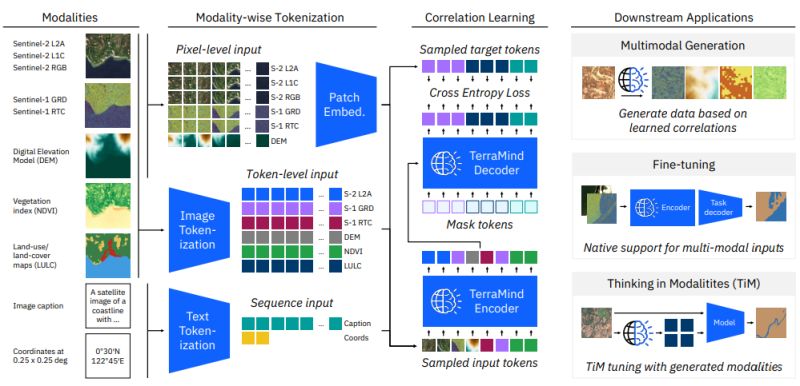
Satellite data just became infinitely more useful. Johannes Jakubik et al. have built the first truly generative multimodal foundation model that can create any type of Earth observation data from any other type.

𝗧𝗵𝗲 𝗯𝗿𝗲𝗮𝗸𝘁𝗵𝗿𝗼𝘂𝗴𝗵: TerraMind represents the first any-to-any generative, and large-scale multimodal model for Earth observation, trained on 1 trillion tokens from global geospatial data spanning 9 million samples worldwide.

𝗪𝗵𝘆 𝘁𝗵𝗶𝘀 𝗺𝗮𝘁𝘁𝗲𝗿𝘀 𝗻𝗼𝘄: Satellite data is often incomplete due to cloud coverage, sensor failures, or low revisit times. Environmental monitoring, agriculture planning, and disaster response all suffer from these data gaps. TerraMind can fill these gaps by generating missing data types from whatever sensors are available.

𝗞𝗲𝘆 𝗶𝗻𝗻𝗼𝘃𝗮𝘁𝗶𝗼𝗻𝘀 𝘁𝗵𝗮𝘁 𝘀𝗲𝘁 𝗶𝘁 𝗮𝗽𝗮𝗿𝘁:
- 𝗗𝘂𝗮𝗹-𝘀𝗰𝗮𝗹𝗲 𝗽𝗿𝗼𝗰𝗲𝘀𝘀𝗶𝗻𝗴: TerraMind encodes high-level contextual information in tokens to enable correlation learning and scaling, while additionally capturing important fine-grained representations using pixel-level inputs
- 𝗧𝗵𝗶𝗻𝗸𝗶𝗻𝗴 𝗶𝗻 𝗠𝗼𝗱𝗮𝗹𝗶𝘁𝗶𝗲𝘀: TerraMind introduces "thinking in modalities" (TiM)—the capability of generating additional artificial data during finetuning and inference to improve the model output
- 𝗨𝗻𝗶𝘃𝗲𝗿𝘀𝗮𝗹 𝗴𝗲𝗻𝗲𝗿𝗮𝘁𝗶𝗼𝗻: Can produce optical imagery from radar data, create elevation maps from satellite photos, or generate land-use classifications from any input type

𝗛𝗶𝘀𝘁𝗼𝗿𝗶𝗰 𝗽𝗲𝗿𝗳𝗼𝗿𝗺𝗮𝗻𝗰𝗲 𝗺𝗶𝗹𝗲𝘀𝘁𝗼𝗻𝗲: TerraMindv1-B outperforms all other GeoFMs by at least 3pp avg. mIoU. Importantly, TerraMind is the only foundation model approach in EO that, across the PANGAEA benchmark, outperforms task-specific U-Net models

𝗥𝗲𝗮𝗹-𝘄𝗼𝗿𝗹𝗱 𝗮𝗽𝗽𝗹𝗶𝗰𝗮𝘁𝗶𝗼𝗻𝘀: Generate missing Sentinel-2 optical data during cloudy periods using available Sentinel-1 radar data, create comprehensive land-use maps from minimal inputs, or produce elevation models for areas lacking topographic surveys.

The model, dataset, and code are all open-sourced under permissive licensing.

How could generative satellite data transform your industry or research?


Blog

Models

Research: Bias and Foundation Models


How Fair are Foundation Models? Exploring the Role of Covariate Bias in Histopathology


A model can achieve equal accuracy across demographic groups and still encode harmful biases. Here's why that matters for medical AI.

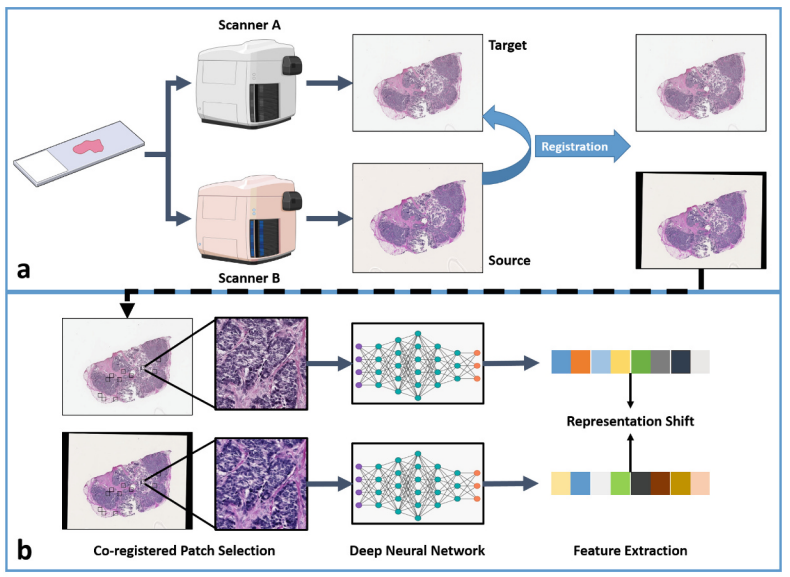
Research from Abubakr Shafique et al. examines a subtle but critical problem in histopathology foundation models: covariate bias. Traditional fairness metrics focus on whether models perform equally well across different patient subgroups. But what if the model is making predictions based on spurious correlations—technical artifacts, scanning differences, or institutional patterns—rather than genuine biological signals?

Why this is overlooked: Most fairness assessments in medical AI check whether accuracy, sensitivity, or specificity are balanced across demographic groups. If those metrics look good, we assume the model is fair. But this misses a fundamental issue: the model might be relying on the wrong features entirely, even if its predictions happen to be correct.

The covariate bias problem:
- Foundation models can inadvertently learn correlations between protected attributes (like demographics) and technical confounders (like staining protocols or scanner types)
- When certain patient populations are overrepresented at specific medical centers with distinct technical characteristics, the model may conflate biological differences with institutional artifacts
- This creates brittle models that fail when deployed in new settings, disproportionately affecting underrepresented groups

What this means for deployment: A histopathology model might show "fair" performance metrics in validation but still perpetuate inequities. If the model learned to associate certain demographic groups with specific scanning artifacts, it could fail catastrophically when those technical conditions change—creating unpredictable performance gaps that traditional fairness audits wouldn't catch.

The path forward: We need to look beyond surface-level fairness metrics and examine what features our models actually rely on. This requires probing representation spaces, testing robustness across technical variations, and ensuring models generalize based on biology rather than institutional fingerprints.

Fairness in medical AI isn't just about equal outcomes—it's about equal reliability and trustworthiness across all populations we serve.