Disentangling Distribution Shift: The Key to Robust Vision Models
How to detect failure before it happens—across healthcare, EO, and beyond.
Continue ReadingHow to detect failure before it happens—across healthcare, EO, and beyond.
Continue ReadingMost pathology AI models fail outside the lab. They’re brittle, data-hungry, and take too long to build. But that’s starting to change—thanks to foundation models trained specifically on histology.
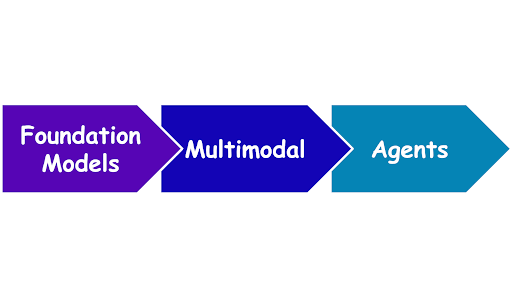
Continue ReadingCVPR 2025 marked a turning point in the evolution of computer vision—not just in technical capability, but in how we define what these models are and do. If you work in computer vision, AI strategy, or are building solutions that rely on vision-based models, the landscape is shifting—fast.
Continue ReadingHow shortcut learning and hidden confounders quietly sabotage model performance—and what you can do about it.
Continue ReadingThe annotation, evaluation, and data issues that most teams overlook—until it’s too late.
Continue ReadingThe pharmaceutical industry is undergoing a significant transformation, with AI playing an increasingly central role. The traditional approach to drug development—relying heavily on broad patient populations and statistical averages—is giving way to more precise methods. Advanced AI algorithms analyzing histopathology images are changing how we identify the right patients for the right treatments, and companies that embrace these tools are seeing real advantages.
Continue ReadingThe journey of developing an AI diagnostic tool is long and intricate. Rigorous development, validation, and regulatory approval are required before clinical use. The final step, deployment, brings this innovative tool into the hands of pathologists, integrating it seamlessly into their workflows. This integration requires meticulous planning to ensure ease of use and reliability.
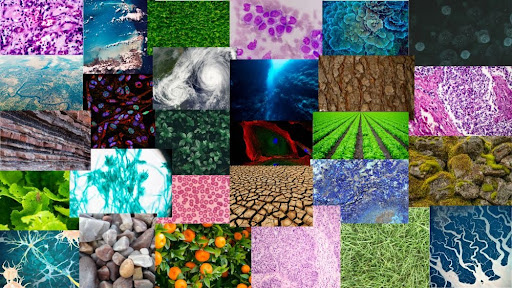
Continue ReadingArtificial intelligence relies heavily on algorithms – a set of computer instructions to accomplish a task. But the power actually comes from the data. Here’s why.
Continue ReadingIn this article, we get into why validating these tools is a pivotal step—not only to build trust among pathologists but also as a vital quality assurance for patients, ensuring accurate and reliable diagnoses in real-world settings.
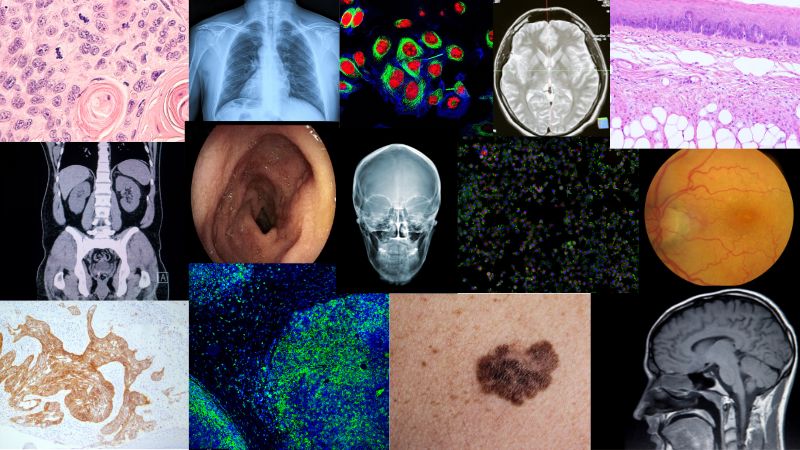
Continue ReadingAI is revolutionizing many fields, and the analysis of H&E histology is no exception. This classic method, used for over a century by pathologists, has now entered the digital age. It offers new opportunities for AI to assist in diagnostics and research. However, adapting these advances to histology in a point-of-care setting brings new challenges like scarce labeled data and variations across devices and facilities.
Continue ReadingArtificial intelligence relies heavily on algorithms – a set of computer instructions to accomplish a task. But the power actually comes from the data. Here’s why.
Continue Reading