How to Benchmark a Foundation Model for Your Domain
Whether you’re evaluating what’s on the market—or developing your own.
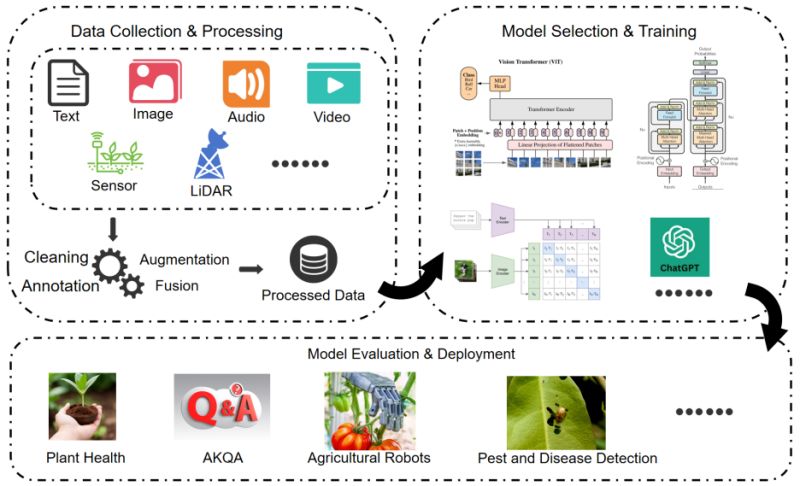
Foundation models are increasingly presented as universal solutions for computer vision: adaptable to any task, robust across any setting, ready to deploy with minimal tuning. But anyone working in a specialized domain knows that real-world data rarely behaves the way these models expect. A model pretrained on millions of images may still buckle under your stain chemistry, your scanner, your phenotype distribution, or your geography.
This is where benchmarking becomes essential. And not only when comparing vendors. A well-designed benchmark is equally important when you’re building or adapting a domain-specific foundation model internally. In both scenarios, the real question is the same: Is this model fit for your tasks, your data distributions, and your operational constraints?
Start With the Problem—Not the Model
Every strong benchmark begins with a clear understanding of the decision the model will ultimately influence. Before thinking about architectures or embeddings, teams need to articulate what success looks like in context. Will the model triage slides, detect anomalies, quantify disease severity, monitor crop stress, or map land cover? And what does “good enough” performance actually mean? A small performance drop might be acceptable for early-stage research, but entirely unacceptable for a workflow tied to patient safety or regulatory documentation.
This grounding is equally critical when evaluating external FMs or refining your own internal candidates. Without it, teams end up measuring what is convenient, not what matters.
Benchmark Against the Distribution Shifts That Actually Define Your Domain
Model failures in the real world almost always arise from unseen variability—distribution shift. The specific shifts that matter vary by domain. In pathology, they include lab-to-lab variation, stain chemistry drift, scanner differences, tissue preparation nuances, and cohort diversity. In Earth observation, agriculture, and forestry, they show up as changes in geography, weather, phenology, seasonality, sensor type, and atmospheric conditions.
A meaningful benchmark incorporates all of these. Evaluating only on in-distribution data gives a false sense of confidence. Instead, test the model on three slices:
-
in-distribution data the model was trained or adapted on,
-
near out-of-distribution data that reflects everyday variability, and
-
far out-of-distribution data that mimics rare but consequential extremes.
This structure allows you to map not just performance, but stability—a critical trait for any model meant to operate beyond controlled environments.
Focus on the Four Pillars That Determine Deployability
While many evaluation frameworks emphasize long lists of attributes, only four consistently shape whether a foundation model is usable in practice:
-
Accuracy captures the model’s raw ability to perform your tasks.
-
Robustness assesses whether that performance holds under your actual distribution shifts.
-
Scalability includes memory limits, inference cost, and the ability to process data at the volume and speed your workflow requires.
-
Reliability captures how predictable the model is—how gracefully it fails, how often it surprises you, and whether its outputs integrate cleanly into your QC processes.
These pillars matter whether you’re choosing a model or building your own.
Benchmark the Full Workflow, Not Just the Model
A foundation model’s value is mediated through the pipeline that surrounds it. Preprocessing choices, tiling strategies, prompting or adapter methods, downstream classifiers, post-processing rules, and human-in-the-loop review all influence real-world effectiveness. Latency and memory constraints can quietly undermine even the most elegant model. That’s why benchmarking needs to occur within the workflow where the model will live—not in a standalone evaluation script detached from operational reality.
Build a Benchmark Suite Designed for Your Company’s Needs
A practical benchmarking suite includes three components that work together to reveal a model’s true strengths and weaknesses:
-
Representative sample tasks — a small set of real tasks your team performs today, such as tissue classification, segmentation, biomarker prediction, crop stress detection, or land-cover mapping. These create continuity across evaluation cycles, whether you’re comparing external FMs or iterating on internal models.
-
Curated distribution shift sets — deliberately chosen slices that reflect the variability your system will eventually see: slides from new hospitals, images from new scanners, fields from new regions, or scenes from different seasons and sensors. You don’t need huge datasets—just the right ones.
-
Long-tail challenge packs — rare phenotypes, unusual weather, staining artifacts, cloud edges, necrotic regions, or underrepresented demographics. These reveal brittleness and highlight the data you may need to collect next.
Together, these three elements provide a realistic, domain-tailored evaluation environment—something generic benchmarks cannot offer.
Use Benchmark Results as a Strategic Roadmap
For external FMs, the benchmark helps you decide whether to adopt a model, how much adaptation is required, and whether a hybrid strategy makes sense. For internal FMs, it highlights which failure modes require new data, which training changes actually matter, and where continued investment is or isn’t justified.
A benchmark is more than a score. It’s a decision tool—a way to transform uncertainty into a clear development and adoption strategy.
If you'd like help designing a tailored benchmark for proprietary images—or reviewing vendor FM claims—I’d be happy to share what I’ve seen across domains.
Just hit REPLY to let me know you’re interested.
- Heather
|