Rock Shape Characterization
Project Details
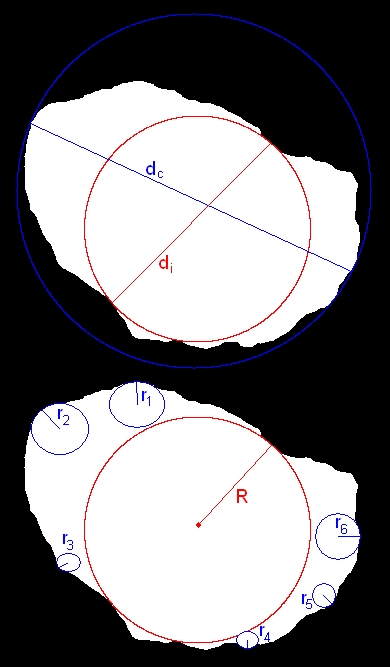
Background: When examining rocks and sediments found in the field, geologists find shape to be an important property to characterize. Shape properties can be divided into three categories: form, roundness and texture. Form characterizes the overall shape of a rock, such as how close to spherical it is. Roundness measures the extent to which the edges have been smoothed out. Texture describes the markings on the surface of the rock, such as striations. The shape of a rock can help determine the history of it, such as where it came from and how it was transported. For example, rocks transported in water tend to get worn down by the force of the water, resulting in a more rounded surface, while the overall shape of the rock changes little after it breaks off from an outcrop. Computing metrics to describe these characteristics can aid in the autonomous classification of rocks. For example, by computing the shape, albedo and texture of a rock, it could be classified as sandstone, limestone, marble, or slate.
Solution: This project explored possible shape descriptors beyond the standard sphericity and roundness that characterize properties of rocks and might be useful features in geologic classification. Each measure was computed on a small set of rocks and the results were analyzed.
Alliterative Applications: Shape properties can be important for classifying natural objects and detecting manufacturing anomalies. While sphericity and roundness are specific to the geologic community, other custom shape characterizations can be developed for unique applications.