 |
Spatial biomarker discovery via interpretable semantic learning in histopathology
AI in digital pathology often acts as a black box. Deep learning can accurately predict patient survival and gene mutations directly from H&E slides, but they rarely explain why. In precision oncology, understanding the spatial microenvironment is critical. When models rely on uninterpretable latent embeddings, it limits our ability to discover new biological mechanisms or trust the AI's clinical reasoning.
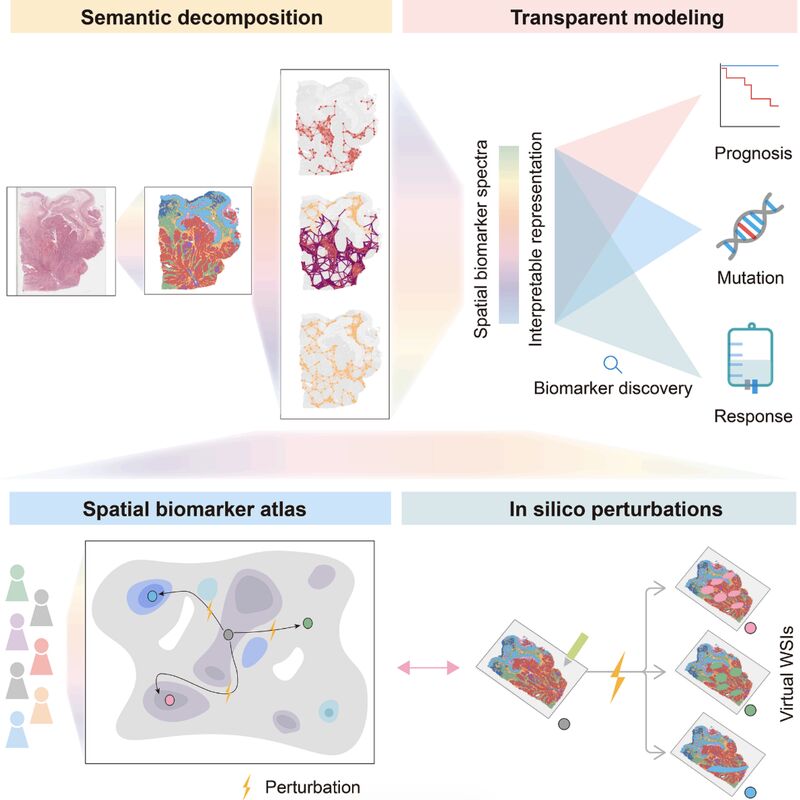
A new paper by 𝙅𝙪𝙣𝙝𝙖𝙤 𝙇𝙞𝙖𝙣𝙜 𝙚𝙩 𝙖𝙡. addresses this transparency gap with 𝙋𝙖𝙩𝙝𝙋𝙧𝙞𝙨𝙢, an AI framework designed to deconstruct whole slide images into
human-interpretable spatial biomarkers.
Here are the key innovations from their research:
• 𝙎𝙚𝙢𝙖𝙣𝙩𝙞𝙘 𝘿𝙚𝙘𝙤𝙢𝙥𝙤𝙨𝙞𝙩𝙞𝙤𝙣 𝙊𝙫𝙚𝙧 𝙇𝙖𝙩𝙚𝙣𝙩 𝙀𝙢𝙗𝙚𝙙𝙙𝙞𝙣𝙜𝙨: Instead of opaque latent features, 𝙋𝙖𝙩𝙝𝙋𝙧𝙞𝙨𝙢 uses an encoder to segment tissue into defined categories (like tumor, stroma, and lymphocytes). It then extracts 628 spatial features, such as multi-tissue interaction graphs and spatial entropy.
• 𝙏𝙧𝙖𝙣𝙨𝙥𝙖𝙧𝙚𝙣𝙩 𝙋𝙧𝙚𝙙𝙞𝙘𝙩𝙞𝙫𝙚 𝙈𝙤𝙙𝙚𝙡𝙞𝙣𝙜: By using
these quantifiable biomarkers in simple linear models, the framework matched the prognostic accuracy of leading foundation models (such as GigaPath and CHIEF) across multiple cohorts. It also successfully predicted mutations (MSI, BRAF, TP53) and stratified patients for adjuvant chemotherapy benefit without losing interpretability.
• 𝙑𝙞𝙧𝙩𝙪𝙖𝙡 𝙀𝙭𝙥𝙚𝙧𝙞𝙢𝙚𝙣𝙩𝙖𝙩𝙞𝙤𝙣 𝙒𝙞𝙩𝙝 𝙑𝙞𝙧𝙩𝙪𝙖𝙡𝙒𝙎𝙄: Moving beyond static prediction, the authors introduced an in silico perturbation tool. Researchers can virtually modify tissue regions—such as expanding stroma or simulating lymphocyte depletion—to directly observe how these structural changes alter the model’s predicted clinical risk.
• 𝙇𝙇𝙈-𝘼𝙨𝙨𝙞𝙨𝙩𝙚𝙙 𝙃𝙮𝙥𝙤𝙩𝙝𝙚𝙨𝙞𝙨 𝙂𝙚𝙣𝙚𝙧𝙖𝙩𝙞𝙤𝙣: Because the biomarkers use standard pathological terms
(e.g., lymphocyte-mucin interaction fragmentation), the framework can feed these specific spatial signatures into Large Language Models to generate structured, testable mechanistic hypotheses for expert review.
𝙏𝙝𝙚 𝙏𝙖𝙠𝙚𝙖𝙬𝙖𝙮: The future of computational pathology goes beyond end-to-end prediction. By translating complex tissue architecture into a transparent, common language, AI becomes a platform for active biological discovery rather than just a predictive oracle.
|
|
|
|
|
 |
Unifying Multiple Foundation Models for Advanced Computational Pathology
Foundation models have substantially advanced computational pathology by learning from large histological datasets, but their performance remains highly variable across different tasks. This inconsistency stems from differences in training data composition and a reliance on proprietary datasets that cannot be cumulatively expanded.
Historically, efforts to combine the strengths of these distinct models have relied on offline distillation, a cumbersome process requiring dedicated distillation datasets and repeated retraining every time a new model is introduced.
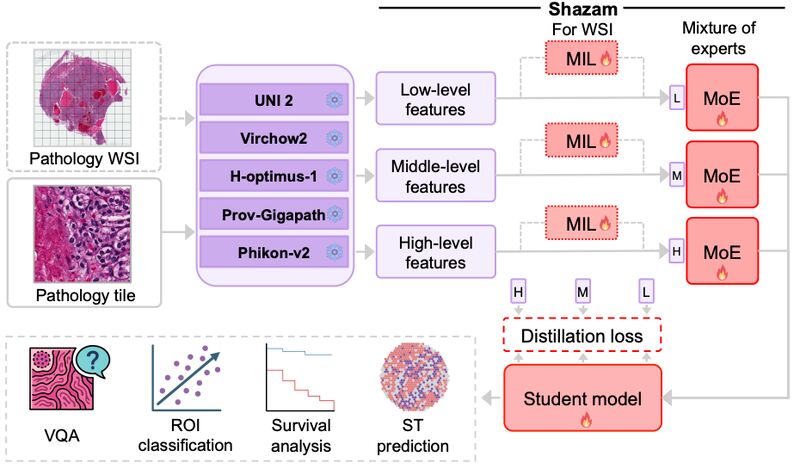
A new paper by 𝙒𝙚𝙣𝙝𝙪𝙞 𝙇𝙚𝙞 𝙚𝙩 𝙖𝙡. introduces 𝙎𝙝𝙖𝙯𝙖𝙢, an online integration model designed to bypass these limitations.
Here are the key innovations:
• 𝙊𝙣𝙡𝙞𝙣𝙚 𝙄𝙣𝙩𝙚𝙜𝙧𝙖𝙩𝙞𝙤𝙣 𝘼𝙣𝙙 𝘼𝙙𝙖𝙥𝙩𝙞𝙫𝙚 𝙒𝙚𝙞𝙜𝙝𝙩𝙞𝙣𝙜: Rather than relying on offline retraining, 𝙎𝙝𝙖𝙯𝙖𝙢 adaptively combines multiple pretrained foundation models into a unified, scalable representation learning paradigm. By fusing multi-level features through adaptive expert weighting and online distillation, the framework successfully consolidates complementary model strengths without needing any additional pretraining.
• 𝙑𝙚𝙧𝙨𝙖𝙩𝙞𝙡𝙚 𝙋𝙚𝙧𝙛𝙤𝙧𝙢𝙖𝙣𝙘𝙚: This unified approach
proves highly effective across a broad range of complex applications. The authors demonstrated that 𝙎𝙝𝙖𝙯𝙖𝙢 consistently outperforms strong individual foundation models in tasks such as spatial transcriptomics prediction, survival prognosis, tile-level classification, and visual question answering.
𝙏𝙝𝙚 𝘾𝙖𝙫𝙚𝙖𝙩: Because 𝙎𝙝𝙖𝙯𝙖𝙢 requires all constituent foundation models to perform feature extraction during both training and inference, its computational cost grows approximately linearly with the number of integrated models.
𝙏𝙝𝙚 𝙏𝙖𝙠𝙚𝙖𝙬𝙖𝙮: Online model integration provides a highly extensible and practical strategy for advancing computational pathology, allowing developers to leverage the diverse strengths of multiple models simultaneously.
|
|
|
|
|
 |
Precision medicine’s inevitable trajectory toward rare-disease-sized cohorts: implications for machine learning and deep learning
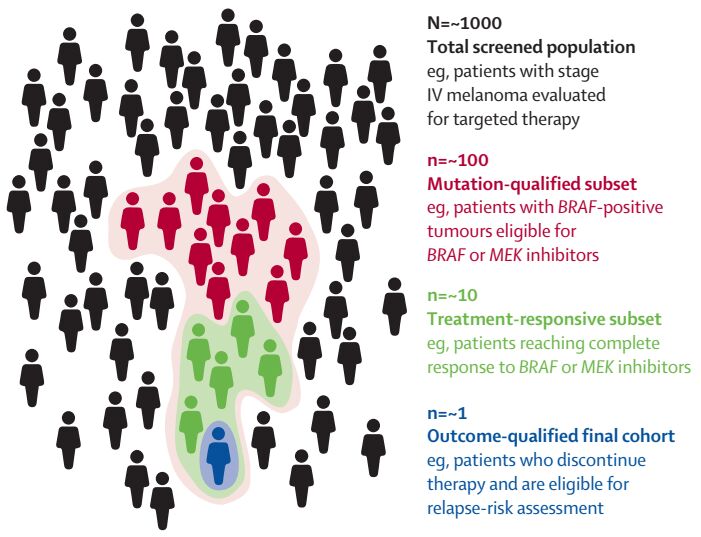
Precision medicine promises treatments tailored to the individual. But by constantly filtering populations into highly specific, mutation-qualified subgroups, it creates a fundamental data problem: the resulting cohorts are too small for standard AI to handle.
Traditional deep learning thrives on massive datasets. A new viewpoint by 𝘼𝙣𝙙𝙧𝙚𝙬 𝙅𝙖𝙣𝙤𝙬𝙘𝙯𝙮𝙠 𝙚𝙩 𝙖𝙡. explores the growing tension between personalized care and our current algorithmic infrastructure. As patient groups fragment into rare-disease-sized cohorts (RDSCs), standard models overfit, fail to generalize, and struggle particularly with complex prognostic and therapeutic predictions.
Here are the key arguments for how the field must adapt:
• 𝙍𝙚𝙩𝙝𝙞𝙣𝙠𝙞𝙣𝙜 𝘼𝙡𝙜𝙤𝙧𝙞𝙩𝙝𝙢𝙞𝙘 𝙎𝙘𝙖𝙡𝙚: The authors argue that simply scaling up foundation models is not the solution for RDSCs due to diminishing returns. Instead, the field must invest in methods specifically designed for data scarcity, such as zero-shot/few-shot learning, Retrieval-Augmented Generation (RAG) to dynamically integrate new data during inference, and synthetic data generation.
• 𝙏𝙝𝙚 𝙁𝙚𝙙𝙚𝙧𝙖𝙩𝙚𝙙 𝙇𝙚𝙖𝙧𝙣𝙞𝙣𝙜 𝘽𝙤𝙩𝙩𝙡𝙚𝙣𝙚𝙘𝙠: While federated learning offers a theoretical solution to single-site data scarcity, the true
barrier is administrative, not just technological. Developing globally instantiated, trusted frameworks is necessary to eliminate the redundant legal hurdles and data usage agreements at every participating institution.
• 𝙎𝙮𝙨𝙩𝙚𝙢𝙞𝙘 𝘿𝙖𝙩𝙖 𝙍𝙚𝙛𝙤𝙧𝙢: Algorithmic innovation alone will fail without infrastructural changes. The authors call for enforcing data standards like synoptic reporting, using AI strictly as high-throughput restrictive filters to clean retrospective data, and transitioning biobanks to opt-out consent models to ensure sufficient data volume.
𝙏𝙝𝙚 𝙏𝙖𝙠𝙚𝙖𝙬𝙖𝙮: The inevitable trajectory of precision medicine is reaching a cohort size of n=1. To get there, the AI community must stop relying exclusively on massive datasets and start building targeted methodologies and cooperative data networks capable of learning from small, highly complex cohorts.
|
|
|
|
|
 |
Linking spatial biology and clinical histology via Haiku
Integrating a tumor's morphological structure, molecular signatures, and patient history has traditionally required disjointed workflows. What if a single AI model could inherently link all three?
In basic and translational biomedical research, understanding a patient's exact condition requires integrating spatial biology (how proteins and genes are distributed) with clinical histology (routine H&E slides) and clinical metadata. However, systematically modeling these distinct modalities together in a shared space has been a major technical bottleneck.
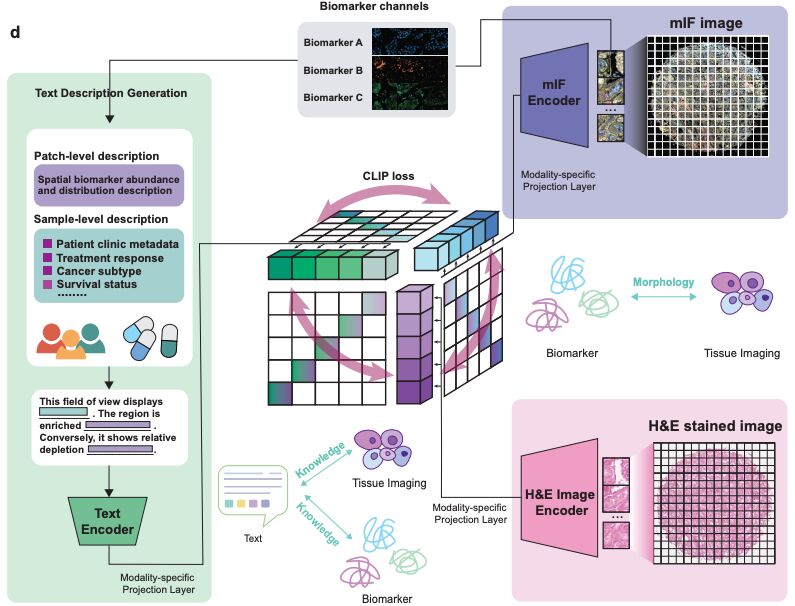
𝙔𝙖𝙣 𝘾𝙪𝙞 𝙚𝙩 𝙖𝙡. introduced 𝙃𝙖𝙞𝙠𝙪, a novel tri-modal contrastive learning model designed to solve this exact problem. Here are the key innovations from their research:
• 𝙏𝙧𝙞-𝙈𝙤𝙙𝙖𝙡 𝘼𝙡𝙞𝙜𝙣𝙢𝙚𝙣𝙩: The team trained the model on a dataset of 26.7 million multiplexed immunofluorescence (mIF) spatial proteomics patches. They successfully aligned this spatial data with matched H&E histology and clinical metadata into a shared embedding space, covering 11 organ types from 1,606 patients.
• 𝙕𝙚𝙧𝙤-𝙎𝙝𝙤𝙩 𝘽𝙞𝙤𝙢𝙖𝙧𝙠𝙚𝙧 𝙄𝙣𝙛𝙚𝙧𝙚𝙣𝙘𝙚: 𝙃𝙖𝙞𝙠𝙪 enables seamless three-way cross-modal retrieval, which substantially improves clinical prediction tasks. It also supports zero-shot biomarker inference (achieving a mean Pearson correlation of 0.718 across 52 biomarkers) purely
through fusion retrieval conditioned on text-based clinical metadata descriptions.
• 𝘾𝙤𝙪𝙣𝙩𝙚𝙧𝙛𝙖𝙘𝙩𝙪𝙖𝙡 𝙀𝙭𝙥𝙡𝙤𝙧𝙖𝙩𝙞𝙤𝙣: The authors introduce a framework for hypothesis generation. By fixing the tissue morphology but intentionally modifying the clinical metadata, researchers can observe the predicted molecular shifts. For example, in a lung adenocarcinoma case study, adjusting the metadata for a favorable outcome surfaced plausible niche-specific shifts, such as increased CD8 and granzyme B, alongside reduced PD-L1 and Ki67.
𝙏𝙝𝙚 𝙏𝙖𝙠𝙚𝙖𝙬𝙖𝙮: By unifying spatial proteomics, routine histology, and clinical text, 𝙃𝙖𝙞𝙠𝙪 offers a powerful new framework for integrative biological analysis. Carefully positioned by the authors as an
exploratory tool rather than one making strict mechanistic claims, it represents a major conceptual step toward deeply integrated, multi-modal precision medicine.
|
|
|
|
|
 |
Ecologically sustainable benchmarking of AI models for histopathology
Deep learning models in pathology are getting more accurate, but they are also getting larger and more compute-intensive. As we push for widespread clinical deployment, we rarely ask: what is the environmental cost of running these models at scale?
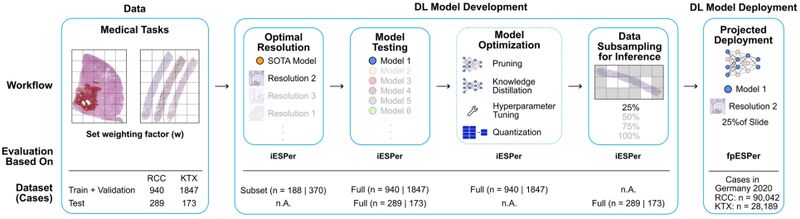
Current benchmarking in computational pathology focuses almost exclusively on diagnostic performance. However, training and running inference on gigapixel whole-slide images consumes significant electricity, translating to a substantial carbon footprint depending on the local energy mix. Aapproaches that allow developing and benchmarking AI models for both their performance and their environmental impact have been missing.
A new article in by 𝙔𝙪-𝘾𝙝𝙞𝙖 𝙇𝙖𝙣 𝙚𝙩 𝙖𝙡. introduces a framework to solve this exact problem.
Here are the key innovations:
• 𝙏𝙝𝙚 𝙀𝙎𝙋𝙚𝙧 𝙎𝙘𝙤𝙧𝙚: The authors introduce the "environmentally sustainable performance" (ESPer) metric. This score quantitatively integrates a model's diagnostic accuracy (using metrics like AUROC) with its operational CO2 equivalent emissions (CO2eq) during both the training and inference phases.
• 𝙁𝙤𝙪𝙣𝙙𝙖𝙩𝙞𝙤𝙣 𝙈𝙤𝙙𝙚𝙡𝙨 𝙏𝙖𝙠𝙚 𝘼 𝙃𝙞𝙩: When evaluating various architectures across kidney transplant and renal cell carcinoma tasks, an interesting dynamic emerged. Massive foundation models like Prov-GigaPath achieved high accuracy, but consistently scored the lowest on the ESPer metric due to their enormous combined CO2eq emissions. Conversely, highly efficient models like
TransMIL offered the highest future projection ESPer scores, providing the best long-term balance.
• 𝘿𝙖𝙩𝙖 𝙍𝙚𝙙𝙪𝙘𝙩𝙞𝙤𝙣 𝙎𝙩𝙧𝙖𝙩𝙚𝙜𝙞𝙚𝙨: The study demonstrated that we do not always need to process the entire slide. By optimizing tile size (such as using a 256 µm edge length) and randomly sampling just 10% of the tissue patches for certain tasks, the models maintained peak diagnostic accuracy while drastically slashing their carbon footprint.
𝙏𝙝𝙚 𝙏𝙖𝙠𝙚𝙖𝙬𝙖𝙮: As AI integrates into routine clinical workflows, long-term inference costs and the sheer volume of daily data will dominate its carbon footprint. The future of medical AI must prioritize models that are not only diagnostically robust but also ecologically sustainable.
|
|
|
|
|
|
|
